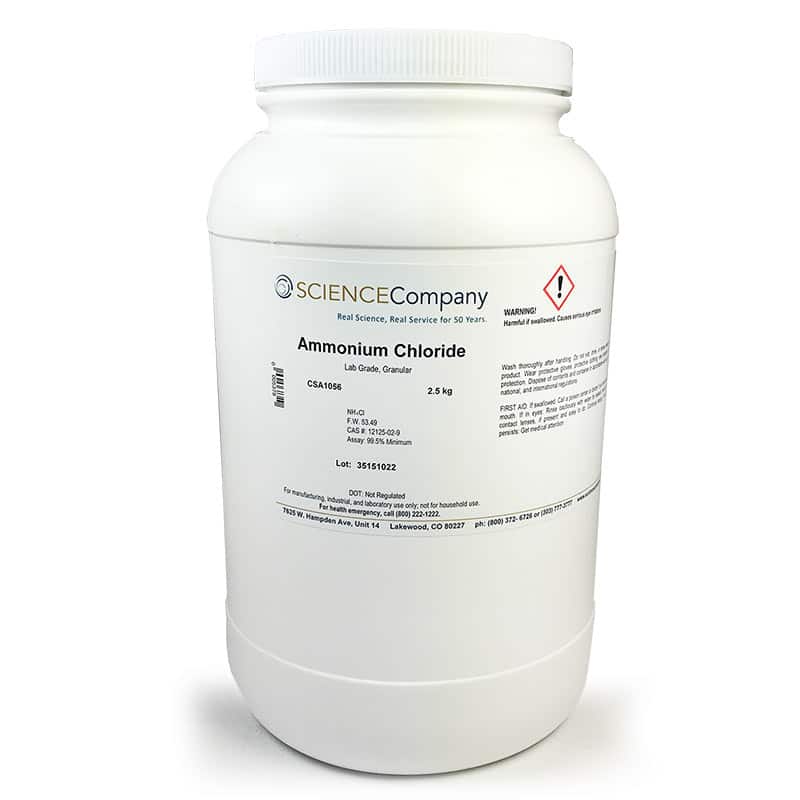


Ammonium Chloride (AKA Sal Ammoniac) is often used in the recovery process of platinum metal (Pt) from catalytic converters. It is combined with water and used as a wash solution to precipitate scrap Pt dissolved in an aqua regia solution.
It is a clear white, granular, water-soluble crystalline salt of ammonia.
In aqua culture, ammonium chloride is used as a safe and controlled way to introduce ammonia into an aquarium during a fishless cycling process. Fishless cycling establishes the beneficial nitrifying bacteria that break down fish waste, without introducing any fish.
For metal artists, ammonium chloride plays a role in creating a green patina on copper and bronze. In this case, ammonium chloride acts as a source of chlorine, which helps form the characteristic green patina
When applied after dissolving in water, ammonium chloride reacts with the metal surface to form a layer of copper chloride (or another metal chloride). This layer then interacts with oxygen in the air, producing the greenish patina associated with aged copper and bronze.
Used in the following patina formulas:
- No. 5 for Antique Green
- No. 8 for Cold Process Green
- No. 9 for Light Green
- No. 14 for Blue
- No. 17 for Deep Rust Red
- No. 18 for Purple
- No 20 for Red – semi-matt (For Copper & Copper Plate)
- No. 25 for Blue Green (For Cast Bronze)
- No. 27 for Blue Green – semi-matt (For Cast Bronze)
Ammonium Chloride readily forms colorless, cubic crystals. Read our article, “Growing Large Crystals with Seed Crystals” for more information.
| Weight |
|---|
Related products